TL;DR:
- Implementing AI in Australian hospitality improves efficiency by automating tasks, enhancing guest experiences, and reducing costs. Success depends on proper data integration, strategic planning, and involving staff in implementation processes. Focusing on high-impact, manageable AI use cases and foundational data improvements leads to meaningful operational and guest satisfaction gains.
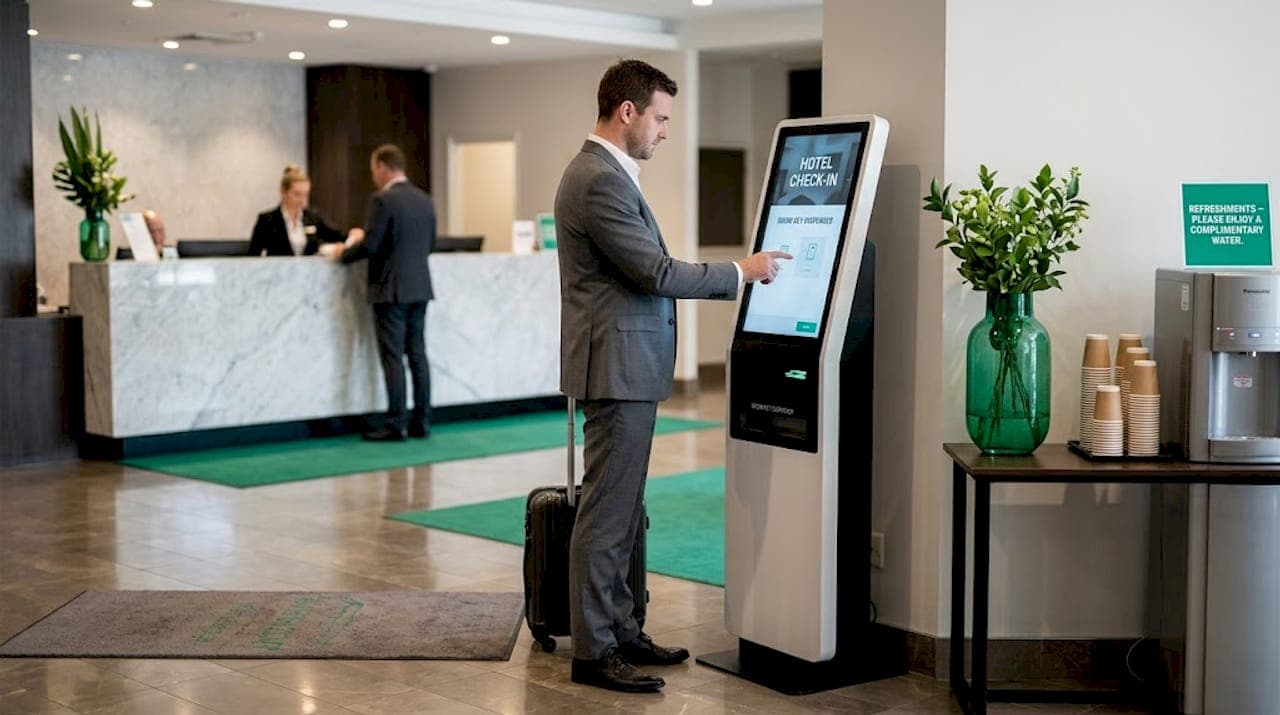
Running a hospitality business in Australia right now means navigating a perfect storm of rising labour costs, unpredictable demand, and guests who expect personalised service at every touchpoint. Whether you manage a boutique hotel in Melbourne, a busy café in Brisbane, or a regional resort, the pressure to deliver standout experiences while keeping margins intact is relentless. AI is changing the equation, not by replacing your team, but by handling the repetitive, time-consuming tasks that drain your best people. This article walks through practical, proven ways AI creates real value across Australian hospitality operations.
Table of Contents
- How AI changes hospitality: Key criteria for success
- Optimise operations: Reducing costs and boosting staff efficiency
- Enhancing guest experience with AI personalisation
- AI use cases in hospitality: From chatbots to predictive analytics
- AI for hospitality: What most managers miss (and how to get it right)
- Unlock hospitality AI benefits with expert support
- Frequently asked questions
Key Takeaways
| Point | Details |
|---|---|
| Task-level transformation | AI brings the biggest gains by shifting routine tasks—not just replacing jobs. |
| Efficiency and savings | AI-driven rostering and automation can sharply reduce costs and boost staff productivity. |
| Guest-centric data is critical | Unified guest data systems unlock personalisation and next-level service. |
| Start with integration | Solid data integration sets up your business to benefit fully from advanced AI. |
How AI changes hospitality: Key criteria for success
Having introduced the promise of AI for hospitality, let's clarify what counts as real value before diving into specific applications.
The conversation around AI and hospitality too often gets hijacked by fear. Will robots take jobs? Will guests feel like they're talking to a machine? These questions miss the point entirely. The more useful question is: which specific tasks are consuming your team's time and energy, and which of those could be handled faster and more accurately by AI?
AI impact is best understood as task-level change, not job replacement. When you reframe the conversation this way, the opportunities become much clearer and far less threatening to your team.
Before committing to any AI solution, evaluate it against four key criteria:
- Guest experience impact: Does this tool make the guest journey smoother, more personalised, or more responsive?
- Staff empowerment: Does it free your people to focus on high-value interactions rather than admin tasks?
- Operational cost reduction: Can you measure a clear reduction in labour hours, waste, or overheads?
- Tech and data integration readiness: Will this solution connect cleanly with your existing property management system, POS, or booking platform?
"The hospitality industry's AI opportunity lies in decomposing tasks and reclaiming the work that actually matters to guests and staff alike." — HospitalityNet
Operators who skip this evaluation phase often end up with expensive tools that solve the wrong problems. A solid practical AI strategy guide will help you map your current workflows before selecting any technology. Start with one area, such as rostering or guest messaging, rather than attempting a full overhaul. Small wins build confidence and momentum across your team.
Optimise operations: Reducing costs and boosting staff efficiency
With selection criteria in mind, let's see where AI is already making a difference in the numbers for hospitality venues.
The operational case for AI in hospitality is no longer theoretical. Australian venues are reporting measurable results from targeted AI deployments, particularly in workforce management. AI-assisted rostering reduced roster build time from four hours to 30 minutes and cut labour spend by about 12% in a Sydney café case study. That is not a minor efficiency gain. For a venue running tight margins, 12% off labour spend can be the difference between a profitable month and a loss.
Here is a snapshot of where AI is delivering the strongest operational returns across hospitality:
| Operational area | AI application | Typical benefit |
|---|---|---|
| Staff rostering | Demand-based scheduling | 10-15% labour cost reduction |
| Inventory management | Predictive ordering | 8-12% reduction in food waste |
| Energy management | Smart HVAC and lighting controls | 15-20% energy savings |
| Predictive maintenance | Sensor-based fault detection | Reduced equipment downtime |
| Demand forecasting | Revenue management tools | Improved occupancy and yield |
Beyond rostering, AI-driven inventory management uses sales data and seasonal patterns to recommend ordering quantities, dramatically reducing over-ordering and spoilage. Predictive maintenance tools monitor kitchen equipment and HVAC systems, alerting your team before a breakdown disrupts service. Energy management platforms adjust heating, cooling, and lighting in real time based on occupancy, which adds up to significant savings across a full year.
Key tasks where AI consistently outperforms manual processes include:
- Rostering and shift planning based on forecasted covers and bookings
- Automated ordering triggered by stock levels and upcoming demand
- Predictive analytics for revenue management and pricing decisions
- Energy optimisation across facilities and accommodation blocks
Pro Tip: When piloting AI for the first time, choose a single, low-risk area with clear metrics. Rostering is ideal because results are measurable within weeks and the impact on your team is immediately visible. Once you have a win, expanding to other areas becomes a much easier conversation internally.
For a deeper look at AI-driven hospitality efficiency, and to explore how these gains translate across other industries, the AI applications for boosting efficiency resource offers useful context for operators comparing their options.
Enhancing guest experience with AI personalisation
Operational gains are only half the picture. Let's explore how AI can help you exceed guest expectations for memorable stays.

Guests today arrive with expectations shaped by streaming platforms, e-commerce, and on-demand everything. They expect you to remember their preferences, anticipate their needs, and communicate with them in ways that feel relevant rather than generic. AI makes this level of personalisation achievable, even for independent operators without a dedicated marketing team.
The most practical applications of AI personalisation in hospitality include:
- Automated pre-arrival messaging tailored to booking type, guest history, and preferences
- Upsell and upgrade offers triggered by booking data and stay patterns
- Loyalty programme personalisation that adjusts rewards and offers to individual behaviour
- Post-stay follow-up with personalised feedback requests and return offers
- In-stay chatbot assistance for room service, local recommendations, and requests
The critical ingredient for all of these is unified guest data. This is where many venues hit a wall. Fragmented, room-based data limits AI's potential because most hospitality systems are built around the room booking, not the individual guest. When your PMS, POS, booking engine, and loyalty platform all hold different pieces of the guest profile, AI cannot connect the dots effectively.
"Most hospitality systems are built around the room, not the guest. Fragmented data limits what AI can actually deliver, regardless of how sophisticated the model is." — Skift, 2026
Building a guest-centric data architecture means connecting these systems so that every interaction, from a breakfast order to a spa booking, feeds into a single guest profile. This is not a quick fix, but it is the foundation that makes advanced AI personalisation possible.
Pro Tip: Before investing in any personalisation AI tool, audit your current data landscape. Map where guest data lives across your systems and identify the gaps. Even basic CRM integration can unlock significant personalisation capability. Explore AI for hospitality integration to understand what a connected data environment looks like in practice, and review the AI implementation steps that Australian operators are using to get there efficiently.
AI use cases in hospitality: From chatbots to predictive analytics
Now that you understand the value of unified guest data, let's look at the most impactful AI applications available for hospitality operators.
The range of AI tools available to hospitality businesses has expanded rapidly. The challenge is no longer finding options. It is identifying which use cases match your most pressing pain points and your current data readiness. Here are the top applications worth considering, ranked by adoption and impact:
-
Guest messaging and chatbots: Automated, conversational tools that handle enquiries, booking confirmations, FAQs, and in-stay requests around the clock. They reduce front desk call volume and ensure guests always receive a timely response, even at 2am.
-
Smart booking and revenue management: AI analyses historical data, competitor pricing, and demand signals to recommend optimal room rates in real time. This directly improves yield without requiring a dedicated revenue manager.
-
AI-assisted staff rostering: As covered earlier, demand-based scheduling tools reduce both over-staffing and under-staffing, cutting costs while maintaining service quality during peak periods.
-
Demand forecasting: Predictive models that combine booking pace, local events, weather patterns, and historical data to forecast covers, occupancy, and F&B demand. Invaluable for procurement and staffing decisions.
-
Energy management automation: Smart building systems that adjust temperature, lighting, and power usage based on occupancy data, reducing energy costs without guest impact.
-
Inventory and procurement planning: AI-driven tools that automate stock ordering based on forecasted demand, reducing waste and ensuring you never run short during a busy service.
| AI use case | Core business benefit | Integration complexity |
|---|---|---|
| Guest chatbots | 24/7 service, reduced call volume | Low to medium |
| Revenue management | Improved yield and occupancy | Medium |
| AI rostering | Labour cost reduction | Low to medium |
| Demand forecasting | Better procurement and staffing | Medium |
| Energy management | Reduced utility costs | Medium to high |
| Inventory planning | Less waste, fewer stockouts | Medium |
To unlock more advanced agentic use cases, integrate unified guest data early. Without this foundation, even sophisticated AI tools will deliver marginal results because they are working with incomplete information.
The practical advice here is simple: start with one or two use cases that match your most acute pain point. A venue struggling with labour costs should start with rostering. A property losing bookings to competitors should explore revenue management. A team overwhelmed by guest enquiries should look at chatbots first. Review the step-by-step AI implementation resource to build a sequenced plan that fits your venue's capacity and budget.
AI for hospitality: What most managers miss (and how to get it right)
Here is an honest perspective on why many AI efforts stumble, and what to do differently in your venue.
After working with hospitality operators across Australia, a pattern emerges. The venues that struggle with AI adoption share a common trait: they invest in the technology before they invest in the foundation. They buy a chatbot before fixing their booking data. They implement a personalisation engine before connecting their PMS and POS. The result is underwhelming, and the team loses confidence in AI altogether.
The job replacement narrative is partly to blame. When managers frame AI as a cost-cutting headcount tool, staff become defensive and resistant. Adoption stalls. The real opportunity, as task-level decomposition analysis consistently shows, is in shifting specific tasks away from your team so they can focus on the genuinely human parts of hospitality. Greeting a regular guest by name. Resolving a complaint with empathy. Crafting an experience that earns a five-star review. These are not tasks AI replaces. They are tasks AI enables by clearing the administrative clutter.
The uncomfortable truth is that most hospitality systems were not designed with AI in mind. They were built to manage rooms, not guests. This means the data architecture required for truly intelligent personalisation does not exist yet in most venues. Prioritising unified guest data and integration readiness is the single most important thing you can do before scaling any AI investment.
Three lessons from recent AI rollouts in Australian hospitality stand out clearly. First, venues that involved their front-line staff in the implementation process saw faster adoption and better outcomes. Second, operators who started with a single high-impact use case built the internal confidence to expand systematically. Third, businesses that skipped the data audit phase consistently reported disappointing results, even when using quality AI tools.
The takeaway is not to slow down. It is to be deliberate. Get your data house in order, bring your team along for the journey, and focus on the tasks that genuinely drain your operation. The AI hospitality boost is real, but it rewards preparation over impulse.
Unlock hospitality AI benefits with expert support
Ready to capture the real value of AI in your hospitality business? Here is how to take the next step.
AI has the potential to transform every layer of your hospitality operation, from smarter rostering and energy savings through to personalised guest journeys that keep visitors coming back. The venues seeing the strongest results are those with a clear strategy, the right data foundations, and a trusted partner to guide implementation.
ORVX AI works directly with Australian hospitality operators to identify the highest-value AI opportunities in their specific context, map current workflows, and build a sequenced roadmap that fits their team and budget. There are no templated packages here. Every engagement starts with understanding your operation from the inside. Explore OMNX AI for Hospitality to see how tailored AI solutions are being deployed across Australian venues, or visit ORVX AI to start a conversation with our team about your next step.
Frequently asked questions
What is the most impactful way AI is used in Australian hospitality?
AI-driven staff rostering and workload optimisation leads to substantial cost and efficiency gains. Rostering build time dropped from four hours to 30 minutes, with labour spend trimmed by around 12%, in documented local case studies.
Why does data integration matter for AI in hospitality?
Without unified guest data, AI can only deliver limited personalisation and automation. Fragmented, room-based systems cap what AI can achieve, regardless of how advanced the underlying model is.
How does AI affect job roles in hospitality?
AI shifts specific tasks between staff and technology, freeing your team for high-value guest interactions. Task-level decomposition is a far more useful framing than focusing on job replacement.
What is the biggest mistake Australian operators make with AI adoption?
Skipping core data and integration work before deploying AI tools leads to consistently underwhelming results. Results remain marginal even with strong models when the underlying guest data architecture is fragmented or incomplete.