
TL;DR:
- AI in logistics improves efficiency through route optimization, demand forecasting, and real-time visibility.
- Australian SMEs mainly apply AI via API integrations for quick, measurable gains without replacing legacy systems.
- Organizational barriers like unclear ROI and skills gaps hinder AI scaling, not technology cost or availability.
Australian logistics managers are caught between two realities. 81% of Australian leaders expect freight cost reductions above 5% by 2030, yet only 40% of logistics service providers have moved beyond pilot stage. That gap is not just a technology problem. It reflects a deeper uncertainty about where to start, what to measure, and whether the investment will pay off for a business your size. This article cuts through the noise and shows you exactly what AI does in logistics, how Australian SMEs are applying it right now, and how to move from curiosity to confident action without betting the business on untested tools.
Table of Contents
- What does AI do in logistics?
- How Australian SMEs are applying AI
- Comparing AI solutions for logistics
- Addressing adoption barriers and scaling AI
- What most SME logistics managers miss about AI
- Get started with AI for logistics
- Frequently asked questions
Key Takeaways
| Point | Details |
|---|---|
| AI unlocks measurable gains | Australian SMEs achieve 20–40% efficiency improvement by piloting targeted AI projects. |
| Pilots outperform full overhauls | Quick pilot projects, especially with custom integrations, deliver faster ROI than costly system-wide changes. |
| Barriers are mostly internal | Scaling AI is mainly limited by unclear ROI and skill gaps, not technology or budget concerns. |
| Strategic partnerships matter | Working with local AI firms accelerates deployment and customisation, bypassing legacy system roadblocks. |
What does AI do in logistics?
AI in logistics is not a single product you buy and install. It is a collection of capabilities, ranging from pattern recognition and predictive modelling to automated decision-making, that you layer onto existing operations. For most Australian SMEs, the practical entry points are route optimisation, demand forecasting, and real-time freight visibility.
Route optimisation uses live traffic, weather, and delivery data to calculate the most efficient path for each vehicle. Demand forecasting analyses historical order data, seasonal trends, and external signals to predict what stock you need and when. These are not futuristic concepts. They are running in businesses your size right now.
Here is what AI is actively doing across the logistics sector:
- Automating repetitive data entry across freight management systems
- Predicting delivery delays before they happen using live traffic and weather feeds
- Optimising warehouse pick paths to reduce labour time per order
- Flagging anomalies in supplier lead times or inventory levels
- Generating freight quotes automatically based on dynamic pricing models
"AI is expected to cut freight costs and shift jobs to strategic roles, moving workers away from manual data tasks toward oversight and analysis."
This job shift is worth paying attention to. AI does not eliminate your team. It changes what your team does. Drivers, dispatchers, and warehouse staff move from reactive, manual tasks to roles that require judgement and problem-solving. That is a cultural shift as much as a technical one.
Understanding AI trends in logistics helps you see where the sector is heading and position your business to benefit rather than scramble to catch up.
How Australian SMEs are applying AI
Knowing what AI can do is one thing. Seeing how businesses like yours are actually using it is far more useful. Australian SMEs in logistics are not building AI from scratch. They are plugging purpose-built tools into existing systems using API-first cloud integrations, which means you do not need to rip out your current software to get started.
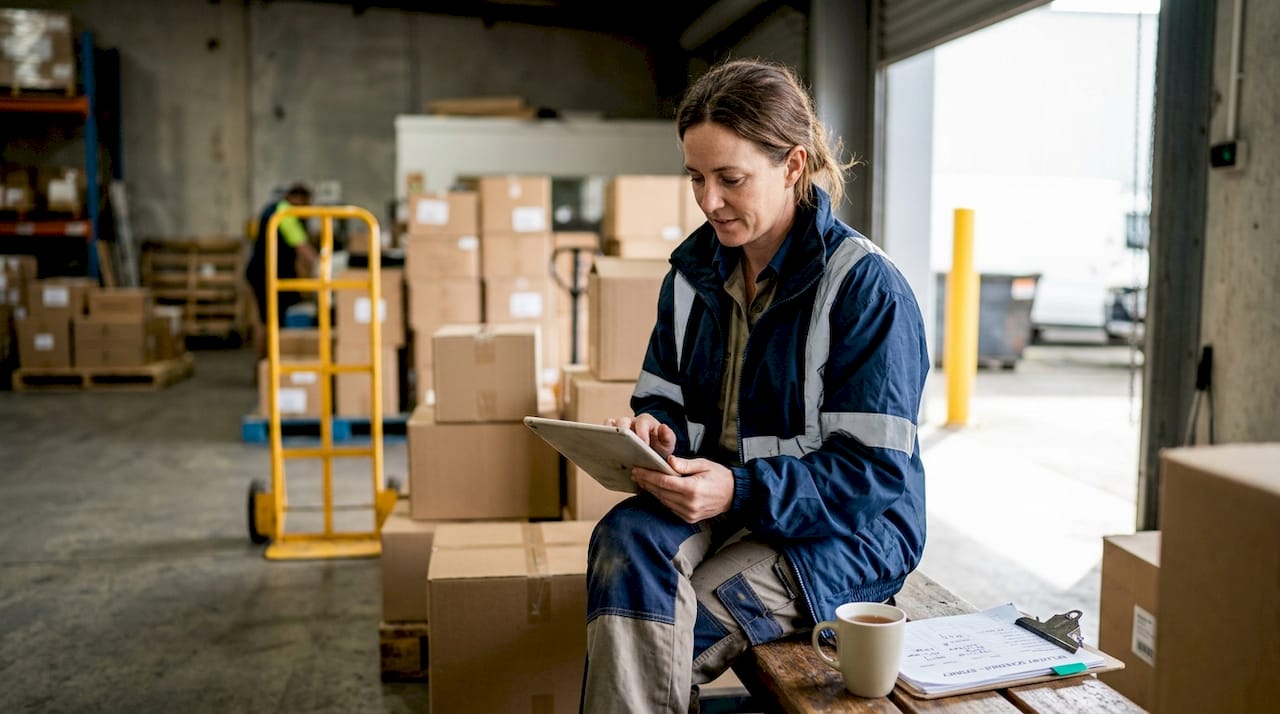
The most common quick-win pilots are route optimisation and demand forecasting. Both deliver measurable results within weeks, not months, and both are well-suited to businesses with limited internal IT resources. Australian SMEs prioritise route optimisation and demand forecasting, often partnering with specialist firms to build custom AI layers that yield 20 to 40% efficiency gains without replacing core systems.
Here is what a practical pilot looks like for a mid-sized freight operator:
- Start with one function such as route planning for a single depot
- Connect the AI tool to your existing transport management system via API
- Run it in parallel with your current process for four to six weeks
- Measure the delta in fuel use, delivery times, and driver hours
- Scale to additional depots once the ROI is confirmed
Pro Tip: Do not try to automate everything at once. Pick the one process that costs you the most time or money each week and run your first pilot there. A focused pilot gives you clean data and a clear business case for the next stage.
Partnering with a local AI consultancy is a smart move for SMEs that lack dedicated tech teams. A good partner will map your current workflows, identify where AI creates the most value, and manage the integration so your operations are not disrupted. Developing tailored AI strategies with a local expert is far more effective than buying a generic platform and hoping it fits. Building an AI roadmap for SMEs before you commit to any tool ensures every dollar you spend is pointed at a real operational problem.
Comparing AI solutions for logistics
Choosing the right integration pathway is where many logistics managers stall. The market offers three main approaches, and each has a different risk and reward profile depending on your current systems and budget.
| Approach | Cost | Scalability | Legacy compatibility | Best for |
|---|---|---|---|---|
| Off-the-shelf platforms | Low upfront | Limited | Often poor | Businesses with modern systems |
| Custom AI layers | Medium to high | High | Excellent | SMEs with legacy TMS or WMS |
| API-first integrations | Low to medium | High | Good | Businesses wanting fast pilots |
Off-the-shelf platforms are fast to deploy but rarely fit the specific workflows of a logistics SME. They are built for the average business, which means they may not handle your freight types, your customer requirements, or your existing data formats without significant manual workarounds.
Custom AI layers are built on top of your current systems. They connect to your transport management system or warehouse management system via API and add intelligence without requiring a full platform replacement. SMEs achieve significant efficiency through customised AI even without a full system overhaul, which makes this approach particularly attractive for businesses with older but functional infrastructure.
Here is a simple decision framework to guide your choice:
- Audit your current systems and identify which ones hold the data AI needs to work with
- Define your primary use case before evaluating any vendor or platform
- Assess your internal IT capacity to manage integrations and ongoing maintenance
- Request a proof of concept from any vendor before committing to a full deployment
- Prioritise vendors with logistics-specific experience in the Australian market
Exploring industry AI applications across similar businesses gives you a realistic benchmark for what results to expect and what questions to ask vendors during evaluation.
Addressing adoption barriers and scaling AI
Understanding your options is only half the journey. The harder challenge is overcoming the internal barriers that keep most SMEs stuck at the pilot stage. The top barriers are unclear ROI and weak internal capabilities, not technology access or upfront cost. That is a critical distinction because it means the solution is organisational, not technical.
| Barrier | Why it stalls progress | How to address it |
|---|---|---|
| Unclear ROI | No baseline metrics to compare against | Define KPIs before the pilot starts |
| Skills gaps | Staff unsure how to use or trust AI outputs | Pair AI tools with structured training |
| Operational inertia | "We've always done it this way" culture | Start with a low-risk, high-visibility pilot |
| Data quality issues | AI needs clean, consistent data to work | Audit and clean core data sets first |
Estimating ROI before you start is not as hard as it sounds. Take your current cost per delivery, your average fuel spend, or your warehouse labour hours per week. Set a target improvement percentage based on industry benchmarks. Then measure actual performance against that baseline after the pilot runs for six to eight weeks. That is your business case.
Here is how to build internal capability without hiring a data science team:
- Upskill two or three key staff in basic data literacy and AI tool use
- Partner with an external consultancy for implementation and initial training
- Create a simple AI governance policy so staff know how to escalate issues
- Review AI outputs weekly in the early stages to build trust and catch errors
Pro Tip: The ROI conversation gets much easier when you frame AI as a cost-reduction tool rather than a technology investment. Show your leadership team the benefits of AI for SMBs in dollar terms, not capability terms.
Scaling AI is not about adding more tools. It is about deepening the value of the tools you already have. Once a pilot proves its worth, extend it to additional routes, depots, or product categories before introducing a second AI function.
What most SME logistics managers miss about AI
After working with logistics businesses across Australia, the pattern we see most often is this: managers expect AI to deliver transformation quickly, and when the first pilot does not produce dramatic results in week two, enthusiasm fades. That is the wrong frame entirely.
The businesses getting the most out of AI are not the ones with the biggest budgets or the most advanced platforms. They are the ones that pick one specific problem, measure it obsessively, and scale only after they have proof. They also invest in the cultural shift, helping staff understand that AI is a tool that makes their judgement more effective, not a replacement for it.
The AI advantages for SMEs are real, but they compound over time. A 5% improvement in route efficiency in month one becomes a 20% improvement by month six as the model learns your network. Patience and discipline matter more than technology selection. Strategic partnerships with people who understand both AI and logistics accelerate that curve significantly.
Get started with AI for logistics
If you are ready to move beyond the pilot stage, targeted support makes all the difference. ORVX AI works directly with Australian logistics businesses to identify the highest-value AI opportunities, design practical pilots, and manage implementation without disrupting your operations.
Whether you are exploring AI warehousing solutions or need end-to-end AI logistics consulting, ORVX AI brings local expertise and vendor-agnostic advice to every engagement. We embed with your team, map your workflows, and build a roadmap that fits your budget and your systems. No generic packages, no offshore handoffs. Just practical AI that delivers measurable results for your business.
Frequently asked questions
What logistics functions benefit most from AI?
Route optimisation, demand forecasting, and real-time tracking are the top logistics functions where Australian SMEs see the fastest and most measurable gains from AI.
How much efficiency can AI deliver in logistics?
Australian SMEs report 20 to 40% efficiency gains from well-scoped AI pilots, particularly when using custom integrations built on top of existing systems rather than full platform replacements.
What's stopping Australian SMEs from scaling AI?
The biggest barriers are unclear ROI and limited internal capabilities, not cost or technology access, which means the fix is organisational rather than technical.
Is off-the-shelf AI or custom integration better?
Custom integration is generally better for SMEs with legacy systems because it adds AI capability without requiring a full platform overhaul, and it can be tailored to specific workflows for measurable results.