TL;DR:
- AI is accessible to small and medium Australian manufacturers, aiding in maintenance, quality, and process optimization.
- Successful AI adoption requires starting with clear pilot projects focusing on high-failure assets and building trust through transparency.
- Prioritizing data quality, process clarity, and stakeholder involvement is key to gaining operational benefits and employee buy-in.
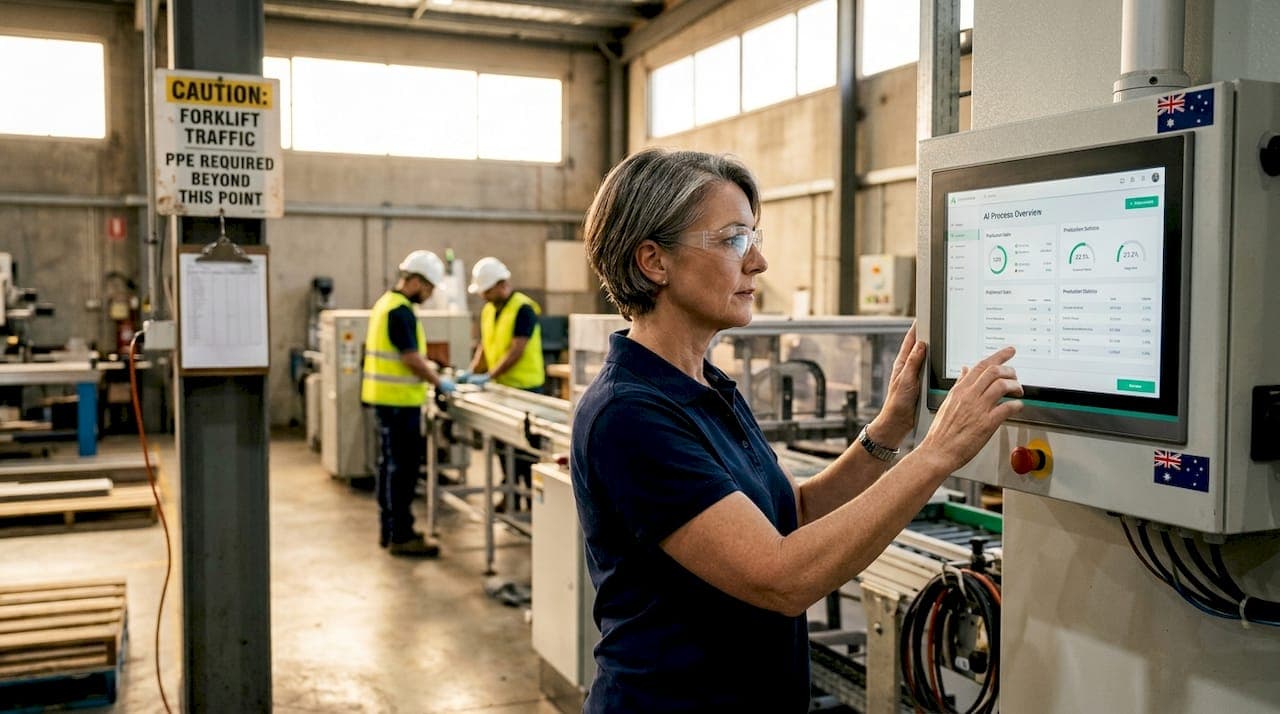
Many Australian SMB manufacturers assume AI belongs to the big end of town. The reality is quite different. Rapid advances in machine learning and automation have made AI genuinely accessible for factories running 20 staff or 200. Whether you're managing a food processing line in regional Victoria or a metal fabrication shop in Western Sydney, the same tools that once cost millions are now available at a fraction of that price. This guide cuts through the noise and gives manufacturing managers a clear, practical picture of what AI actually does on the factory floor, where to start, and how to avoid the mistakes that sink most early projects.
Table of Contents
- What is AI in manufacturing?
- Key AI technologies and methodologies in manufacturing
- How AI delivers value: Use cases for Australian SMB manufacturers
- Pitfalls, best practices, and building trust with AI
- A fresh perspective: What most AI guides get wrong for Australian SMBs
- Next steps: Unlocking your manufacturing advantage with AI
- Frequently asked questions
Key Takeaways
| Point | Details |
|---|---|
| Start small with pilots | Australian SMBs gain fastest ROI by piloting AI on one asset line with good data. |
| Trustworthy AI matters | Transparency and explainability are crucial for operational buy-in and compliance. |
| Avoid common pitfalls | Poor data and rushed integration lead to errors—clarify processes first. |
| AI is accessible now | Modern AI tools can boost efficiency without full-scale digital transformation. |
What is AI in manufacturing?
AI in manufacturing isn't one single thing. It's a collection of techniques that allow machines and software to learn from data, spot patterns, and make decisions without being explicitly programmed for every scenario. For a factory manager, that translates into systems that can predict when a machine is about to fail, flag a defective product on the line, or automatically adjust process settings to hit a quality target.
There are three learning types you'll encounter most often:
- Supervised learning: The system learns from labelled historical data. Think predictive maintenance models trained on thousands of past failure records, or quality inspection tools trained on images of good and defective parts.
- Unsupervised learning: The system finds patterns in data without labels. This is used heavily for anomaly detection, spotting unusual vibration signatures or temperature spikes before they become problems.
- Reinforcement learning: The system learns by trial and feedback, adjusting its actions to maximise a reward. Closed-loop process control, where the AI continuously tweaks parameters to optimise output, is a prime example.
Research confirms that AI applications in manufacturing primarily use supervised learning for predictive maintenance, quality inspection, and process optimisation in domains like machining and additive manufacturing, unsupervised for anomaly detection in joining processes, and reinforcement for closed-loop control.
Manufacturing is particularly well suited to AI adoption because it generates enormous volumes of structured data: sensor readings, production counts, quality measurements, maintenance logs. That data is the fuel AI runs on. Most factories are already collecting it; they're just not using it well yet. A good AI for manufacturing overview will show you exactly how these techniques map to your existing operations.
For real-world context on how these methods translate to efficiency gains, the AI efficiency case studies from Australian businesses are worth reviewing before you commit to any approach.
Pro Tip: Don't try to boil the ocean. Pick one asset type or one production line and apply AI there first. A narrow, well-defined use case delivers faster results and far less complexity than a factory-wide rollout.
Key AI technologies and methodologies in manufacturing
Now that you know what AI means for manufacturing, let's look at the core technologies transforming factory floors.
The backbone of AI-enabled manufacturing sits in three interconnected systems. Multi-agent systems (MAS) allow multiple AI components to coordinate decisions across a factory, such as scheduling, logistics, and quality control, without a single centralised controller. Manufacturing execution systems (MES) act as the operational layer connecting shop floor activity to business systems. When AI is layered on top of MES, you get real-time decision support rather than just historical reporting. Predictive analytics ties it all together, turning raw sensor data into actionable forecasts.
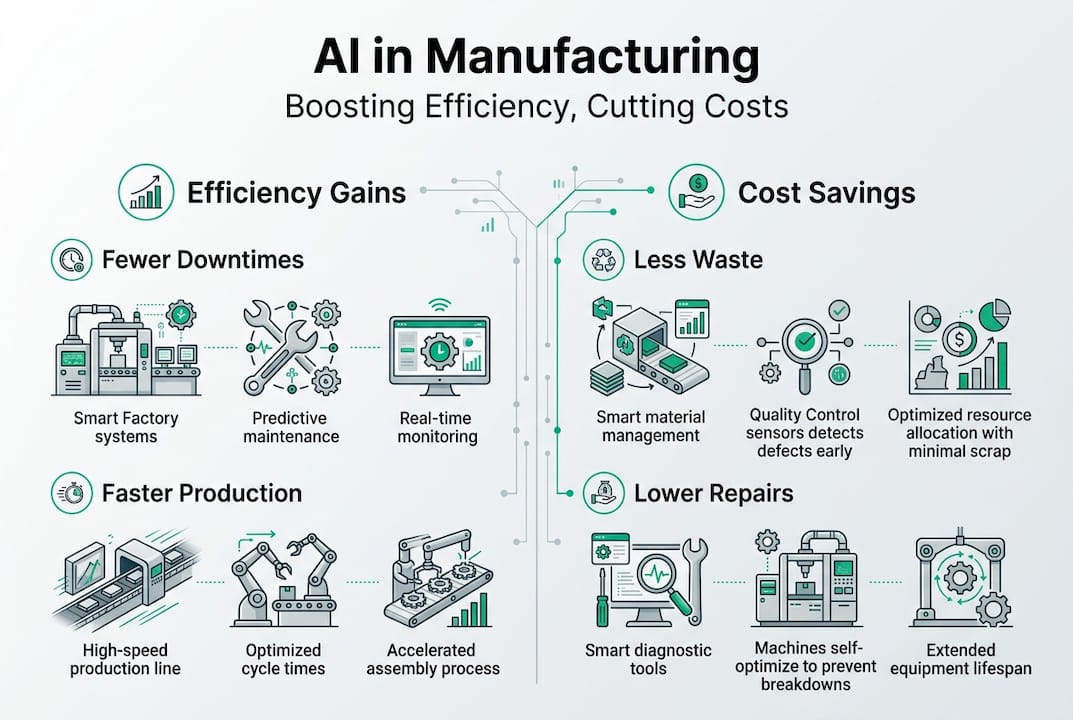
Key methodologies include MAS integrated with MES for decentralised control, predictive analytics, and Industry 4.0 and 5.0 smart factories, representing a significant shift in how manufacturers think about automation.
The table below summarises the main technology layers and what they deliver:
| Technology | Primary function | Typical SMB benefit |
|---|---|---|
| Predictive analytics | Forecast failures and quality drift | Reduce unplanned downtime |
| MES with AI overlay | Real-time production visibility | Faster decision-making |
| Computer vision | Automated quality inspection | Lower defect escape rates |
| MAS scheduling | Dynamic job and resource allocation | Higher throughput |
| Digital twin | Virtual simulation of processes | Lower trial-and-error costs |
Industry 4.0 focused on connecting machines and automating repetitive tasks. Industry 5.0 goes further, placing human judgement at the centre and demanding that AI systems be trustworthy, transparent, and fair. For Australian SMBs, this shift matters because it means AI tools need to earn the trust of your operators, not just your accountants.
A recent KPMG survey found that 93% of manufacturers report advanced AI integration as a strategic priority, yet adoption among smaller operators remains patchy. The gap isn't technical; it's about knowing where to start. If you want to build your AI strategy on solid ground, the methodology matters as much as the technology choice.
"The factories winning with AI aren't necessarily the biggest. They're the ones that picked the right problem, prepared their data, and staged their rollout carefully."
How AI delivers value: Use cases for Australian SMB manufacturers
With the tech landscape mapped, let's get more specific about where and how AI brings real value to Aussie manufacturers.
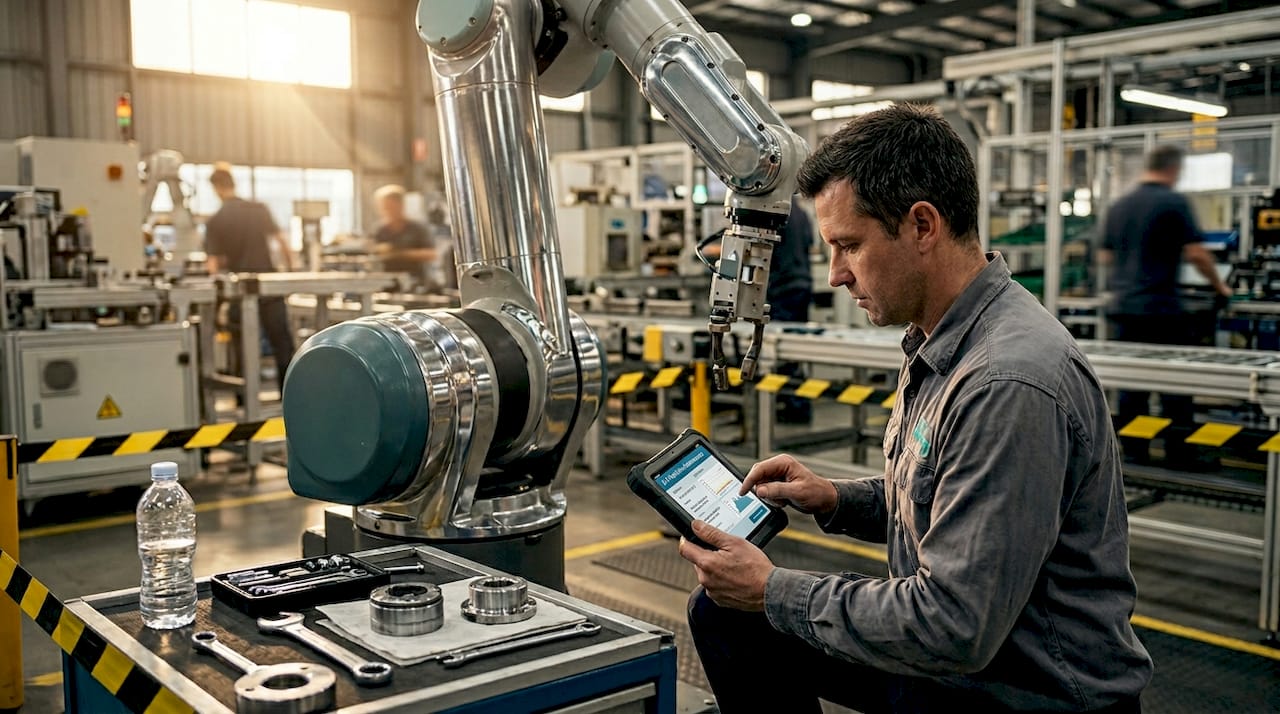
The highest-impact use cases for SMBs tend to cluster around four areas: predictive maintenance, quality inspection, process optimisation, and anomaly detection. Each of these can be piloted on a single line or asset before any broader rollout.
Traditional vs. AI-assisted approaches:
| Task | Traditional approach | AI-assisted approach |
|---|---|---|
| Maintenance scheduling | Fixed calendar intervals | Condition-based, predictive alerts |
| Quality inspection | Manual visual checks | Computer vision with defect scoring |
| Process adjustment | Operator experience and gut feel | Real-time closed-loop optimisation |
| Anomaly detection | Alarms triggered after failure | Early warning from pattern deviation |
For Australian SMB manufacturing managers, prioritise predictive maintenance and quality AI on high-failure assets with 18 or more months of historical data. Start pilots on one line, such as a robotics or ERP-integrated cell, for quick ROI. Address edge cases through explainable AI and human oversight to build trust early.
Here's a practical sequence for getting started:
- Audit your data: Identify which assets have the richest sensor history and the most costly failure patterns.
- Map the process: Document the current workflow before touching any technology. You can't automate what you haven't understood.
- Select a pilot asset: Choose one machine or line with clear success metrics, such as reduced downtime or fewer defect escapes.
- Deploy and measure: Run the AI pilot alongside your existing process for at least 60 days before drawing conclusions.
- Review and iterate: Use the pilot data to refine the model and build the business case for the next phase.
Quick wins come from predictive maintenance and vision-based inspection. Long-term value builds through process optimisation and integrated scheduling. Understanding AI-driven automation pitfalls before you start will save you from the most common and costly mistakes.
Pitfalls, best practices, and building trust with AI
Getting value from AI initiatives isn't automatic. Many SMB projects falter due to avoidable mistakes and a lack of trust from the people who matter most: your operators and supervisors.
The most common traps include:
- Bad data: Garbage in, garbage out. If your sensor data is patchy, mislabelled, or inconsistent, the AI will learn the wrong patterns and produce unreliable outputs.
- Scope creep: Starting with one use case and then expanding mid-project before the first phase is stable. This kills momentum and burns budget.
- Ignoring edge cases: Real factory floors are messy. Unusual materials, shift changeovers, and equipment substitutions create scenarios the AI hasn't seen. Without human oversight, these edge cases cause failures.
- Skipping process clarity: Research confirms that process clarity before AI is essential. Poor data scales errors, and edge deployment compounds integration issues. Industry 5.0 emphasises trustworthy AI, built on transparency and fairness, over raw automation speed.
Explainable AI (XAI) is worth understanding. It refers to AI systems that can show their reasoning in plain language, telling an operator why a machine is flagged for maintenance, not just that it is. XAI builds operator trust, supports regulatory compliance, and makes it far easier to catch model errors before they cause harm.
Building stakeholder trust follows a simple sequence. Involve operators in the pilot design. Show them the outputs before automating any decisions. Run the AI in advisory mode first, where it recommends but humans decide. Expand automation only after your team is comfortable with the system's accuracy.
For a structured approach to avoiding these traps, the AI integration best practices guide covers the key steps for Australian SMBs. If compliance is a concern, understanding AI audits for compliance is a smart early investment.
Pro Tip: Never scale before your pilot is stable. Stable means it has demonstrated measurable ROI and has genuine acceptance from the operators using it daily. Scaling a shaky pilot just amplifies the problems.
A fresh perspective: What most AI guides get wrong for Australian SMBs
Most AI guides focus on technology. The real risk for Australian SMB manufacturers isn't falling behind on tools; it's adopting tools without the operational readiness or explainability needed to get genuine buy-in from your team.
Global case studies look impressive on paper. A German automotive plant or a US semiconductor facility deploying AI at scale has almost nothing in common with a 40-person aluminium extrusion business in Queensland. The data volumes, IT infrastructure, and workforce dynamics are completely different. Applying those frameworks directly is a recipe for frustration.
Leadership involvement and deliberate upskilling consistently outperform blind technology spend. When managers understand what the AI is doing and why, they can guide their teams through the change rather than just announcing it. That distinction is critical in the Australian manufacturing context, where skilled tradespeople are hard to replace and harder to win back if they feel sidelined by technology.
The most important mindset shift is this: treat your manufacturing data as your most valuable asset before you deploy AI, not after. SME success with AI consistently comes back to data quality and process discipline, not the sophistication of the algorithm.
Next steps: Unlocking your manufacturing advantage with AI
If you're ready to put these insights into action, here's how you can take the next confident step.
Moving from understanding to implementation is where most manufacturers stall. The concepts make sense, but knowing which tool to choose, which vendor to trust, and how to sequence the rollout is genuinely complex without experienced guidance.
ORVX AI works directly with Australian manufacturers to plan, implement, and scale AI with less risk and more clarity. From on-site process audits to pilot design and staff training, we embed with your team to build solutions that actually fit your operation. Explore the AI for manufacturing solutions we offer, or visit ORVX AI to start a conversation about your specific challenges. Local expertise, vendor-agnostic advice, and a hands-on approach make the difference between a failed pilot and a genuine competitive advantage.
Frequently asked questions
What is the biggest benefit of using AI in manufacturing for Australian SMEs?
The main benefit is rapid improvement in operational efficiency and cost reduction, particularly through predictive maintenance and quality inspection. Supervised learning for predictive maintenance and quality inspection delivers some of the fastest measurable returns available to SMB manufacturers today.
How should manufacturers start with AI to avoid common pitfalls?
Start with a pilot on a high-failure line or asset where you already have reliable data, and focus on process clarity before applying any AI tools. Prioritise high-failure assets with 18 or more months of historical data to maximise your chances of a successful first deployment.
Does AI require a full digital transformation of manufacturing operations?
No. Most SMBs can start with targeted AI pilots and scale gradually as they build data quality and employee confidence. MAS, MES, and analytics systems provide a solid foundation without requiring a wholesale transformation of your existing operations.
How can we ensure AI decisions in our factory remain transparent and trusted?
Ensure your AI system includes explainable components, regular audits, and human oversight, especially when automating core processes. Trustworthy AI emphasising transparency and fairness is the direction Industry 5.0 is heading, and building those principles in from the start protects both your operation and your team.